
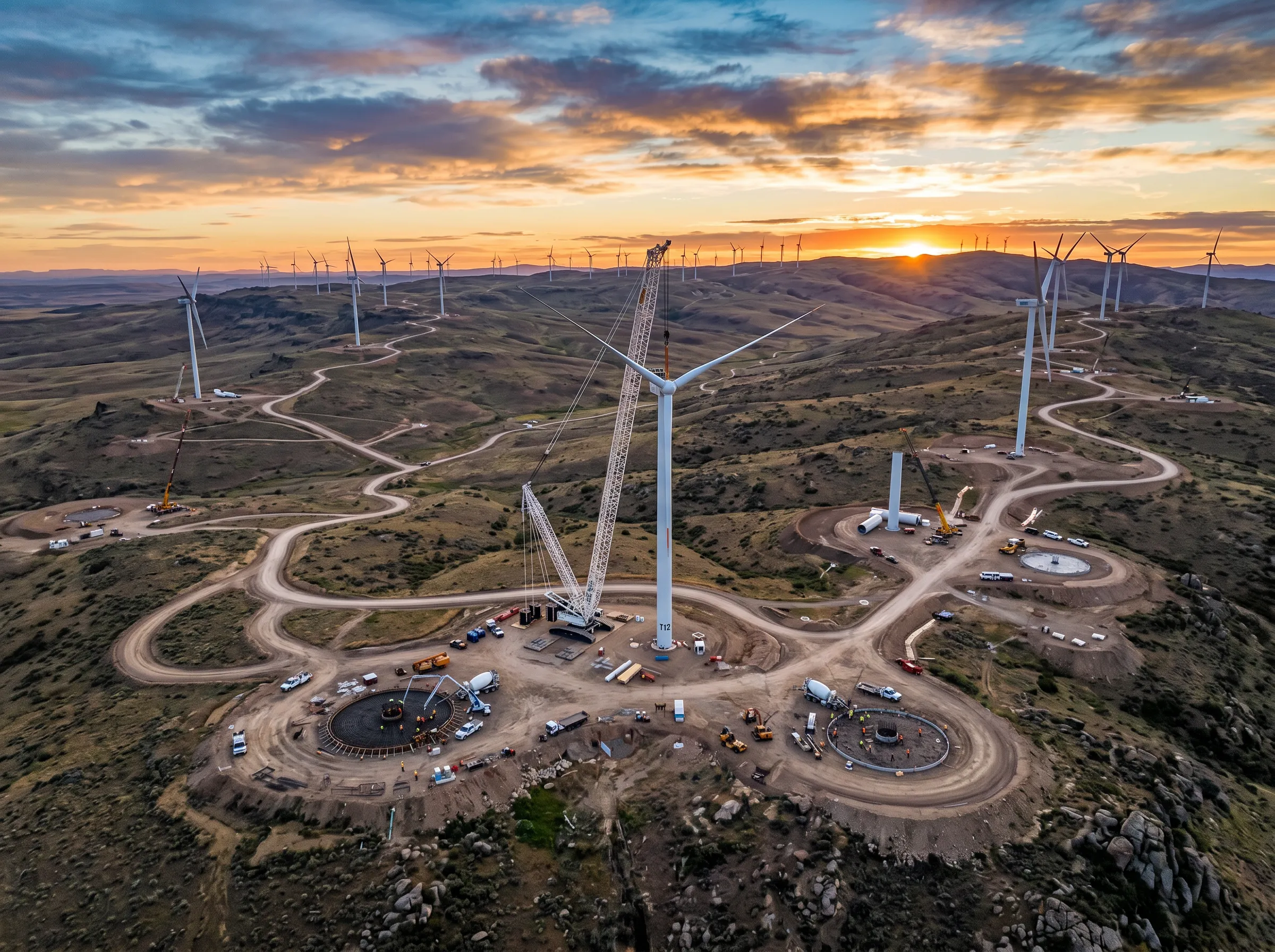
Wind
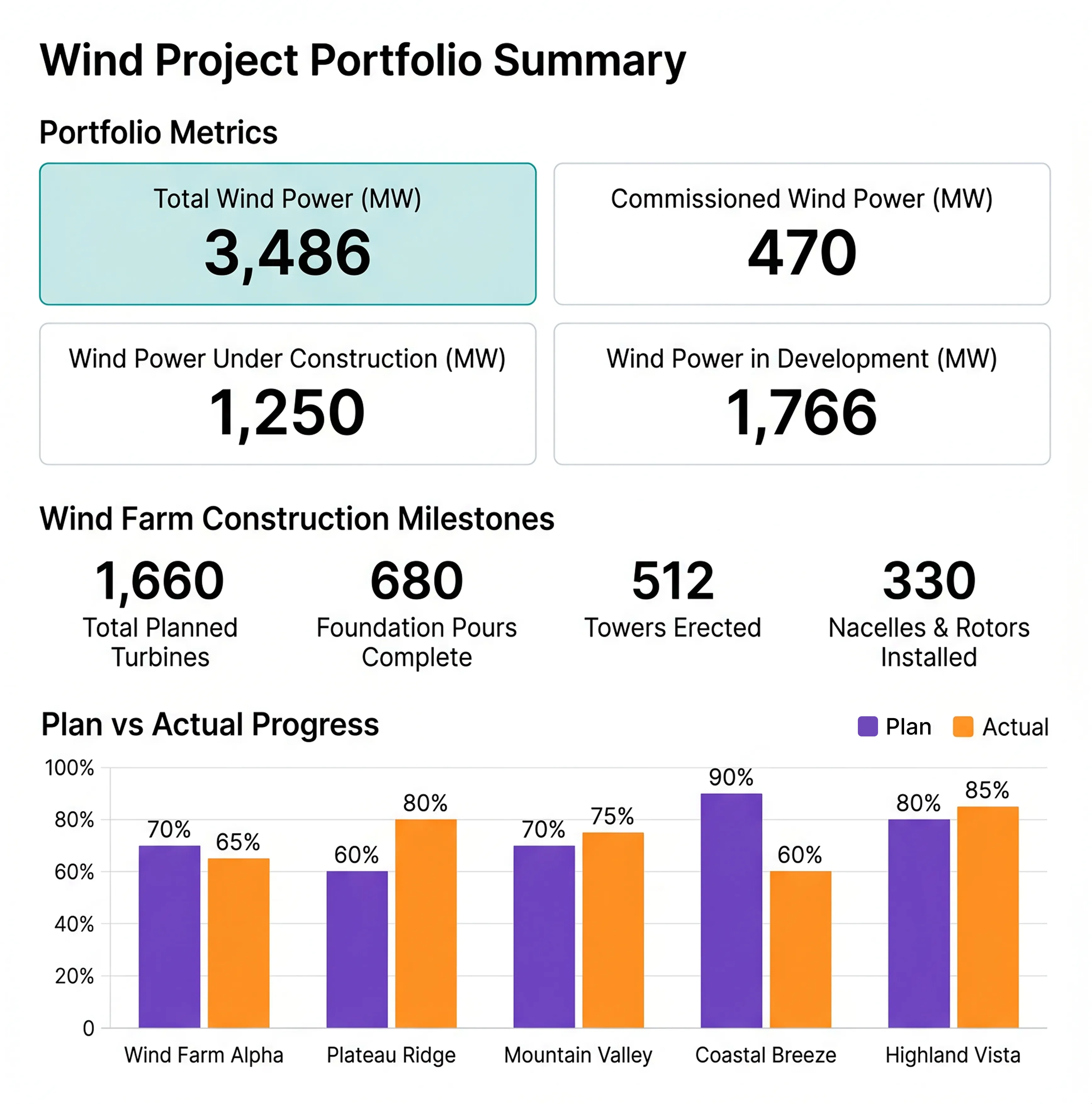
Trusted by Teams Building and Operating Wind at Scale
projects digitized
One Platform for the Entire Wind Lifecycle
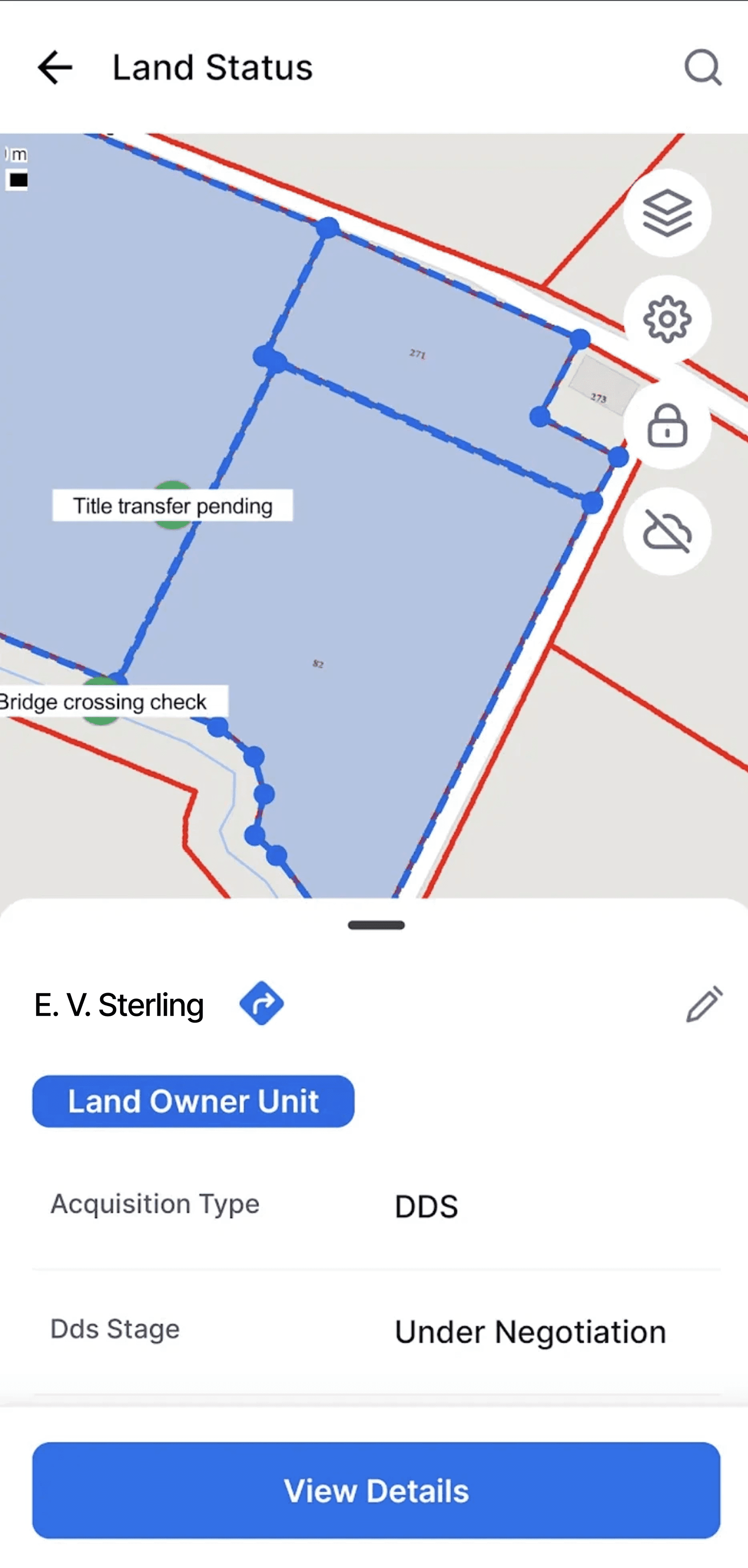
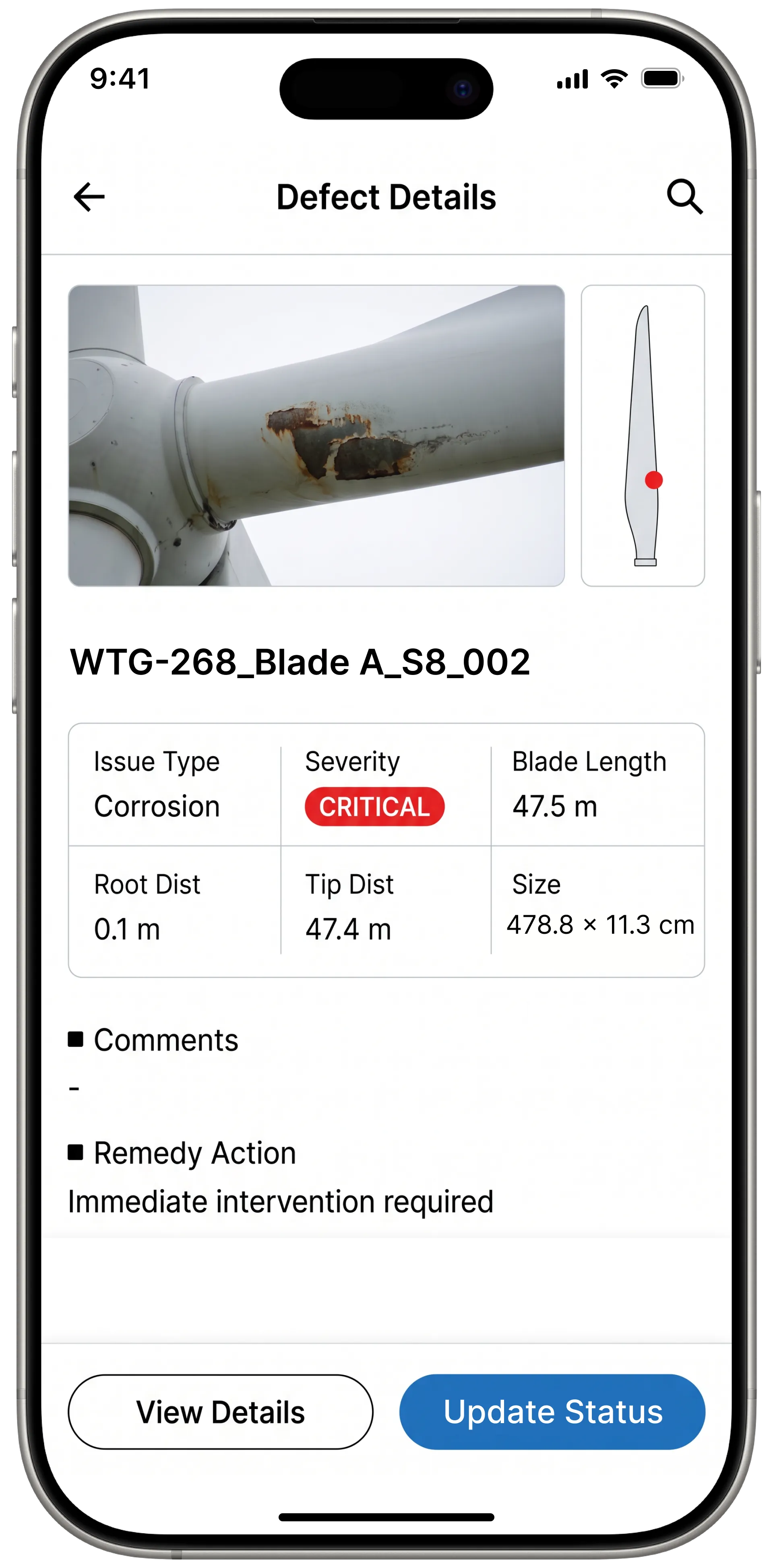
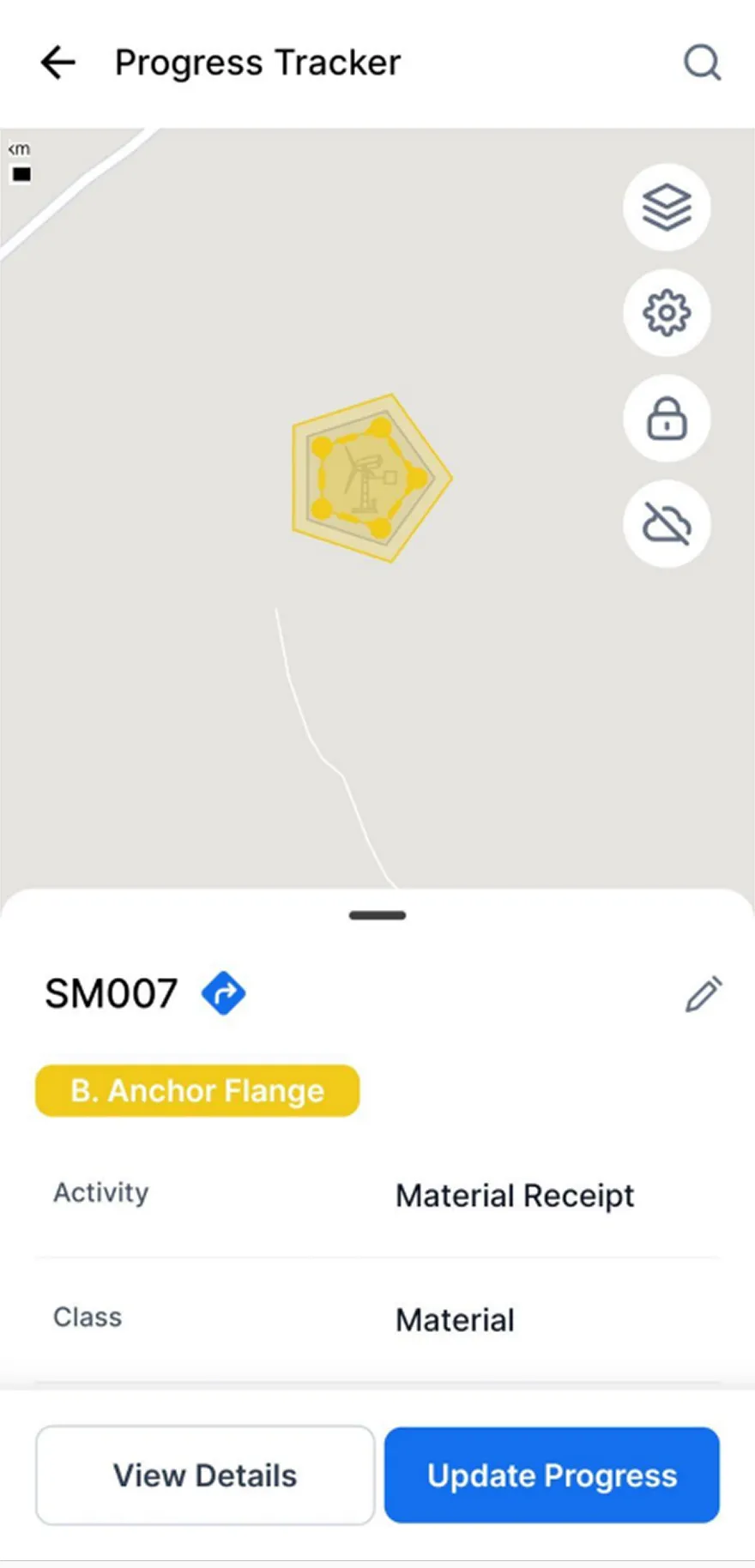
Your Wind data lives in spreadsheets, ERPs, and WhatsApp threads. These data silos prevent easy transfer of information between teams during Development, Construction and Handover to Operations.
SenseHawk brings it all into one map-based platform — connecting scattered teams, fragmented workflows, and lifecycle gaps into a single source of truth.
The Wind Value Chain
Empowering Every Role in the Wind Value Chain
From site suitability to repowering, we provide a unified geospatial system of record - connecting distributed teams and siloed data across your entire wind portfolio.

GIS Visibility
Map-Based Site Visibility
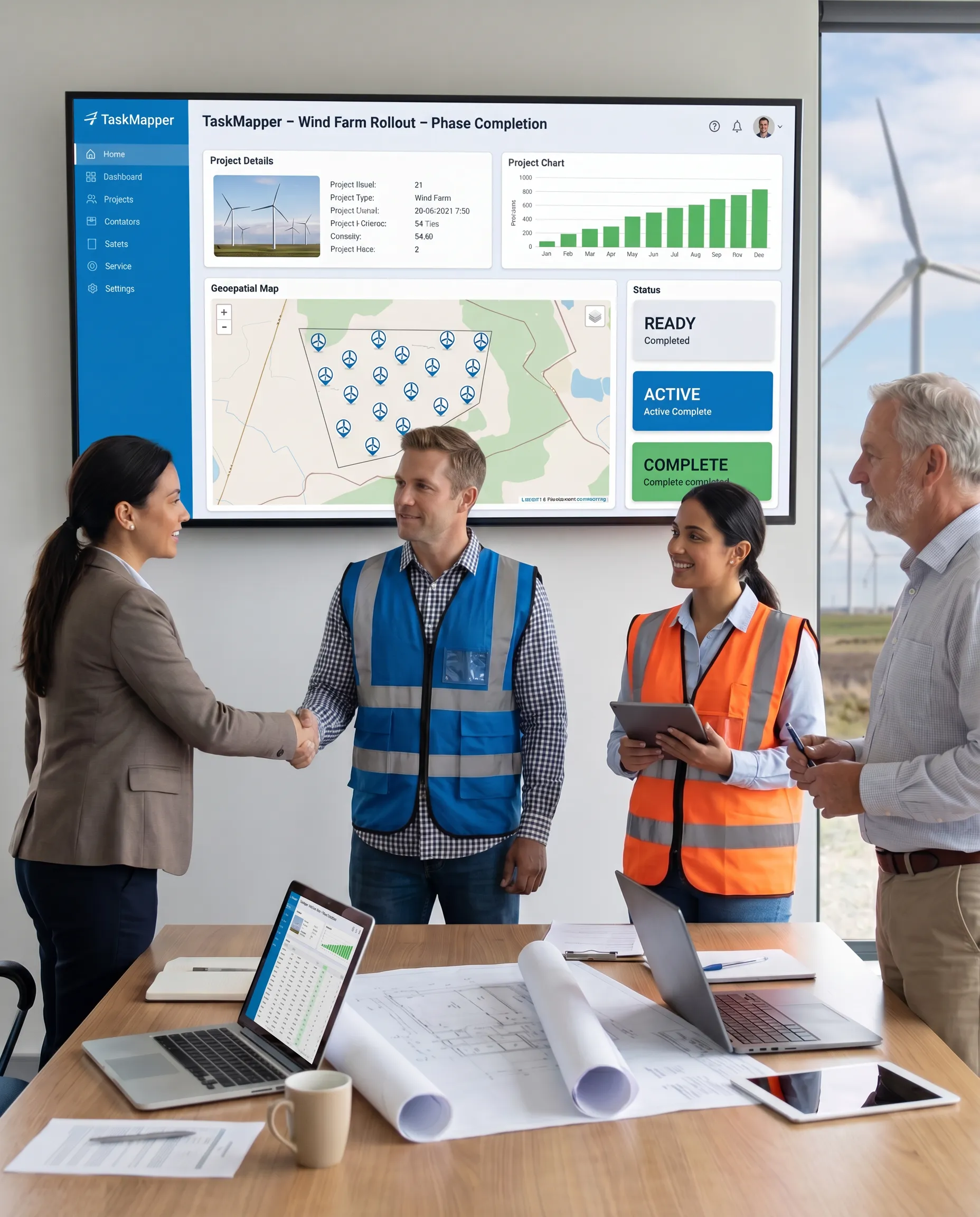
Unlike traditional project management tools, TaskMapper is built on a map. For wind projects, this means your site isn't just a list of tasks; it’s a living geospatial record.
Digital twin
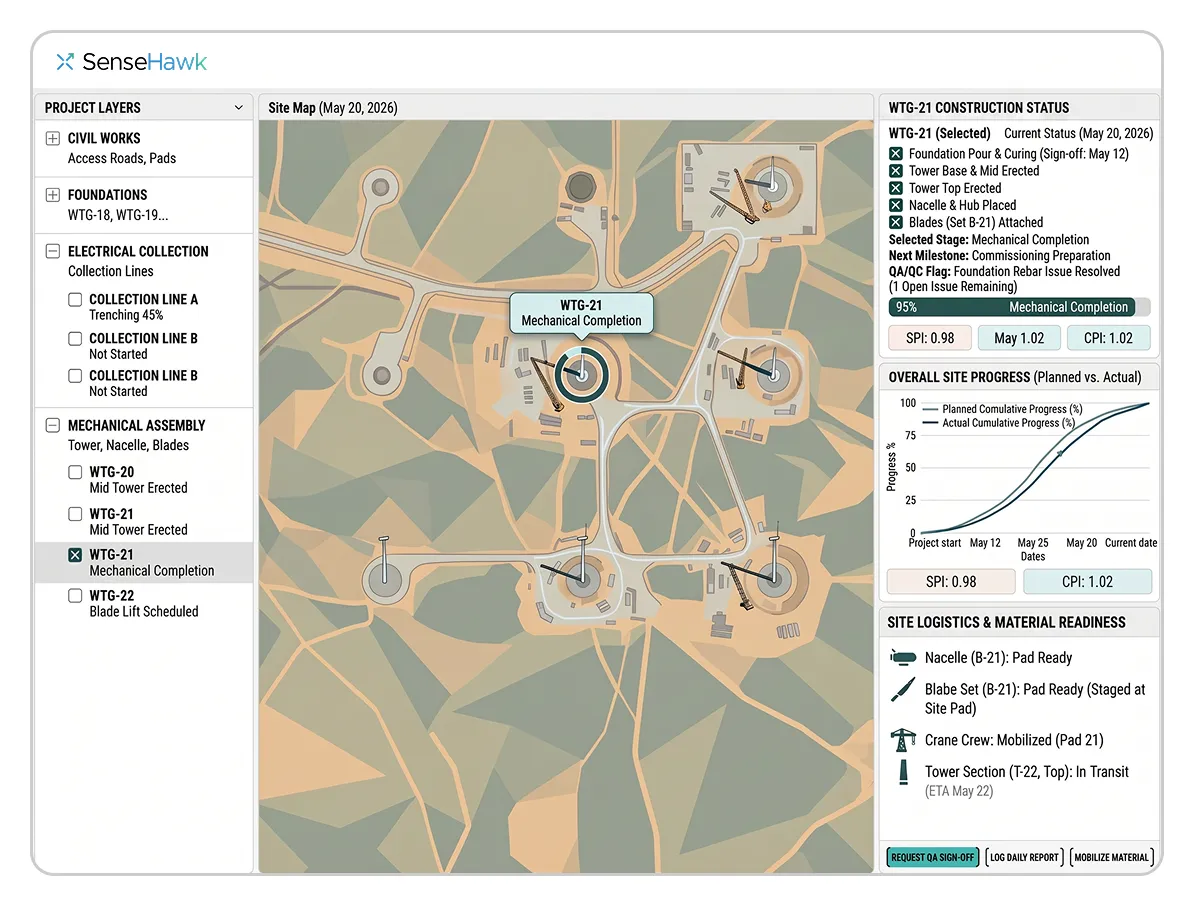
Spatial Twin
Bring together GIS layers, turbine and met-tower locations, bathymetry data, drone imagery, and construction site plans in an interactive, GIS-accurate geospatial view.
Project Asset Twin
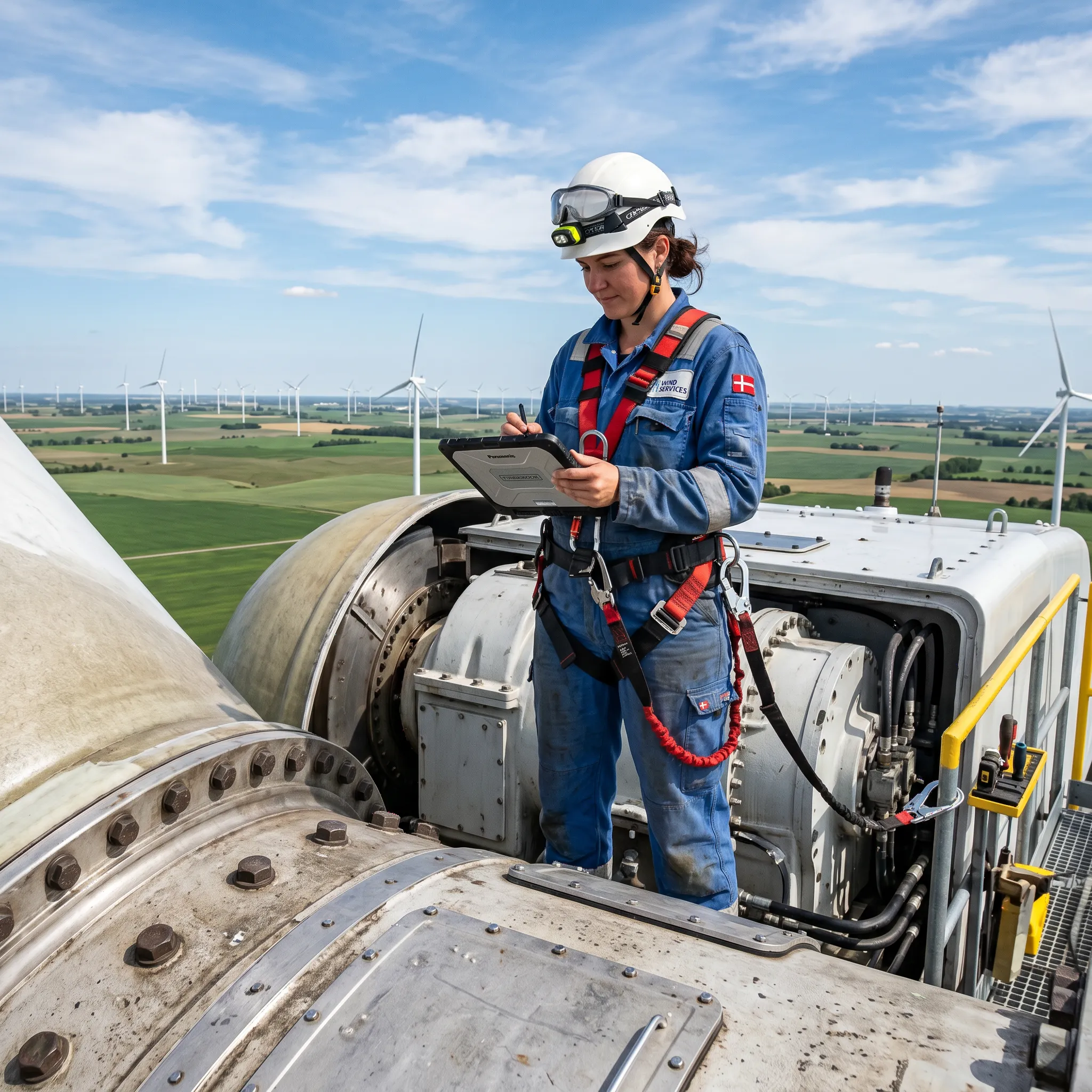
Track serialized components with warranties, blade serial numbers, gearbox health data, and met-data streams linked to each exact wind asset.
Process Twin
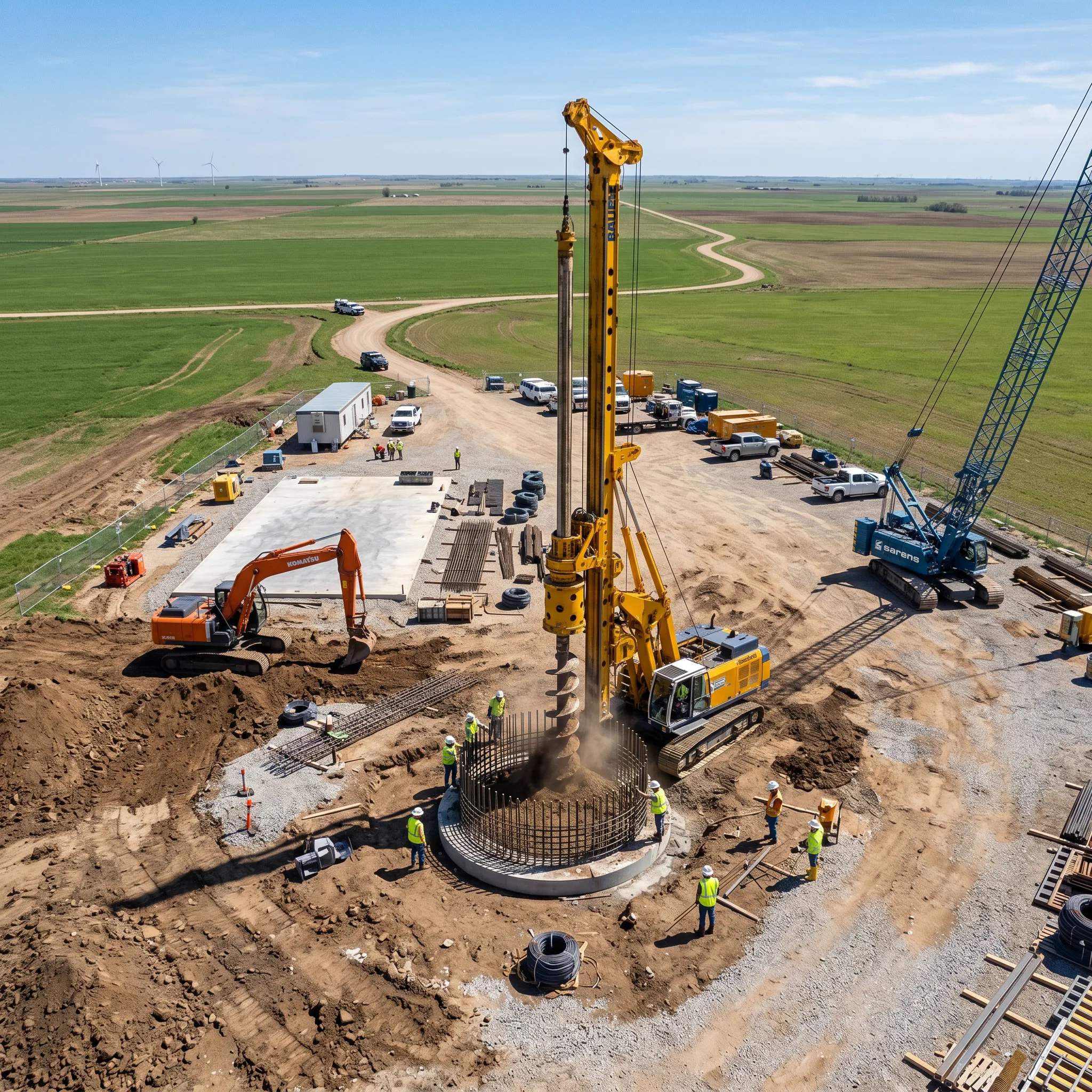
Digitize permit applications, foundation concrete tests, blade lifting protocols, and commissioning results-then connect those workflows directly to the precise turbine or asset on site.
Field-to-Schedule
Closing the Gap: From Field Updates to Schedule Sync
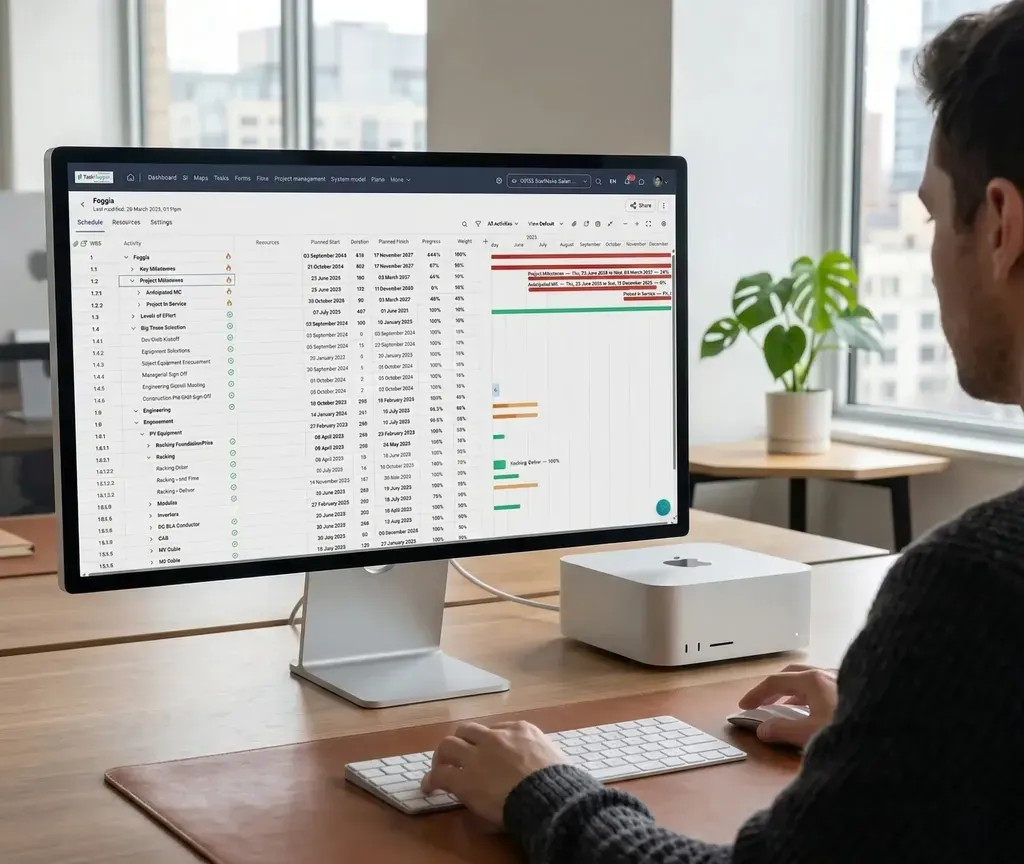
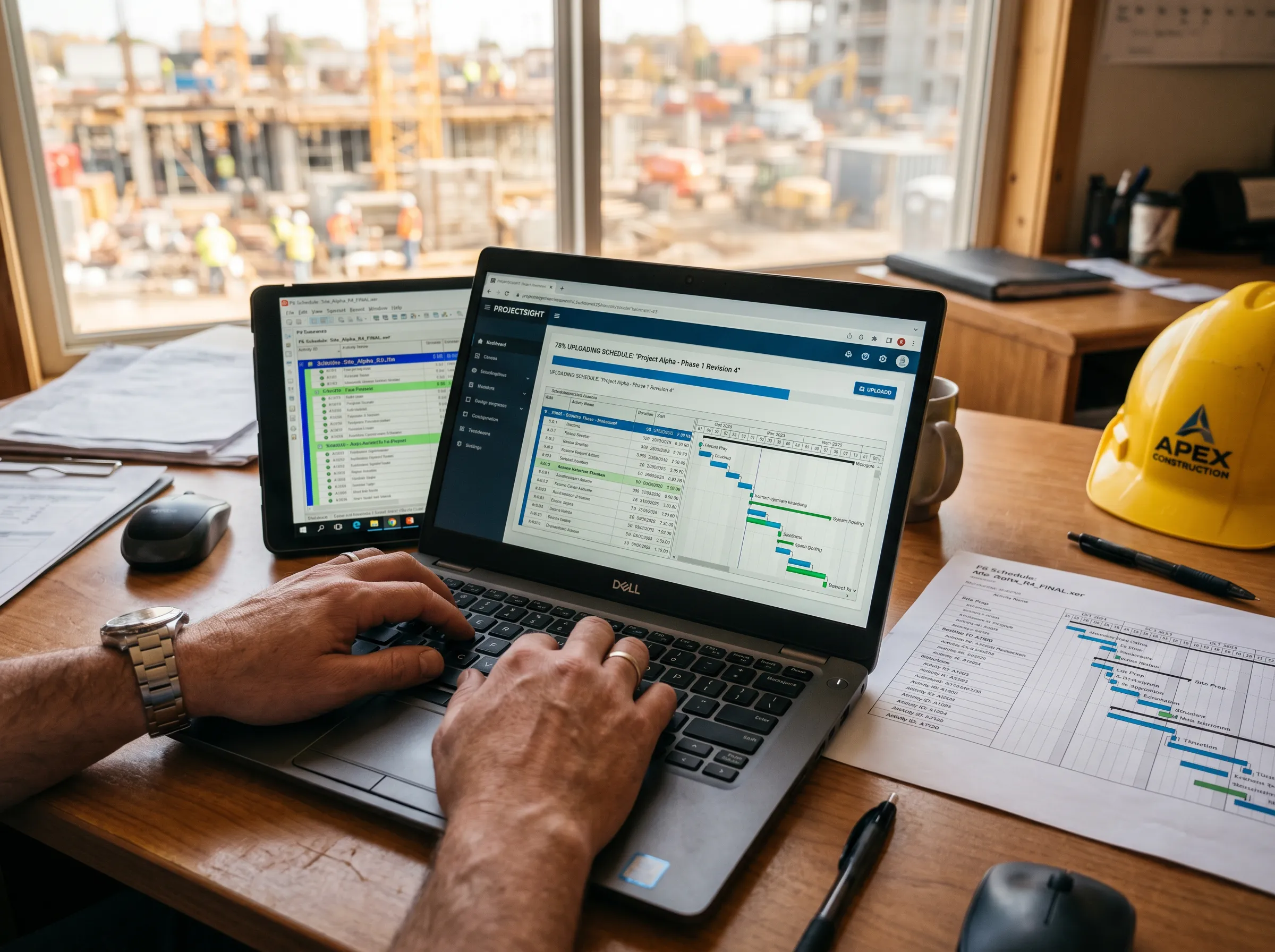
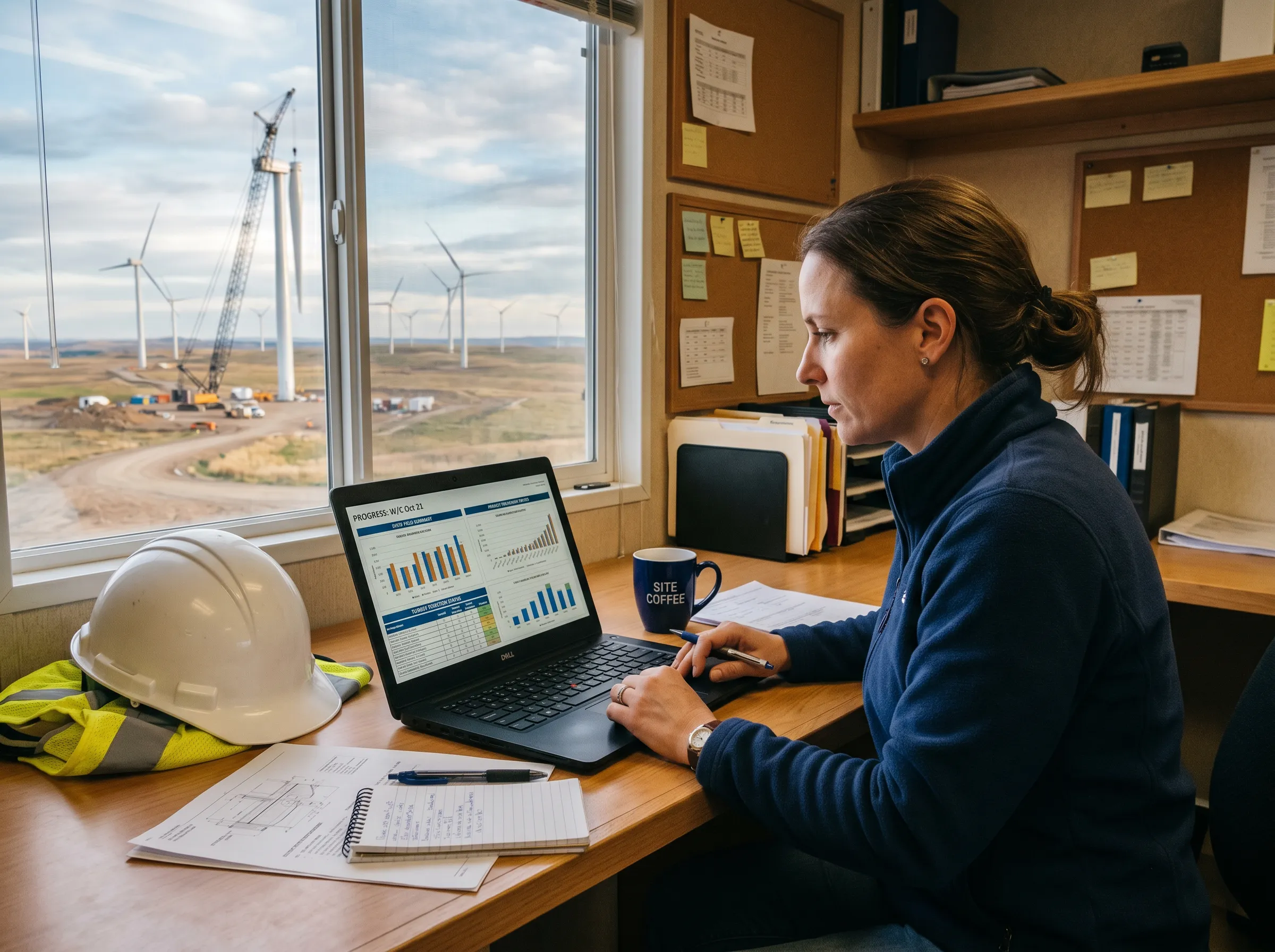
The biggest headache for a Wind Project Manager is the Schedule Update. Typically, it takes days for field reports to be compiled into a Primavera (P6) or MS Project schedule. With TaskMapper, this happens in clicks, not days.
Why SenseHawk
Built for Wind. Not Adapted for It.
Generic construction tools were never designed for utility-scale wind. See how SenseHawk compares where it matters most.
Team Collaboration
Better Collaboration Between EPCs and Owners
Wind projects involve a "village" of contractors. TaskMapper acts as the Single Source of Truth
Contextual Chat
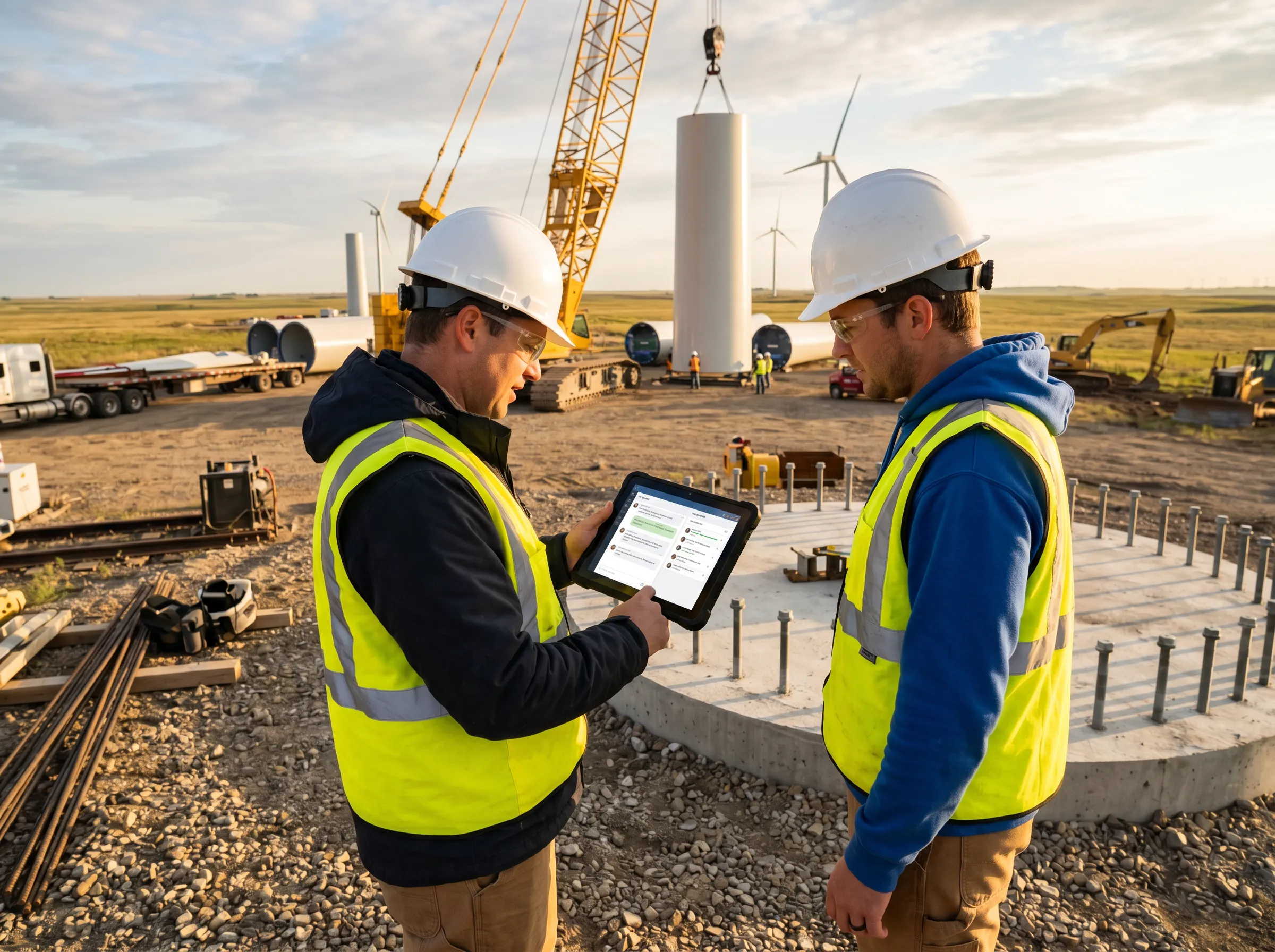
Teams can chat within a specific task (e.g., "Crane delay at Pad 5") so the conversation is always linked to the location and the problem.
Automated Daily Progress Reports (DPRs)
Instead of superintendents spending two hours every evening on paperwork, TaskMapper aggregates daily field data into a professional PDF report in minutes.
Outcomes
Reduce delays with proactive alerts and real-time geospatial tracking of turbine installation and site progress.
Cut rework and ensure compliance through digital QA/QC forms, standardized checklists (e.g., foundation, tower), and geo-tagged evidence.
Accelerate wind farm commissioning with real-time data and faster digital testing workflows.
Optimize asset management with end-to-end traceability of turbine components (blades, nacelles, towers) to prevent idle crews.
Make better portfolio decisions with live dashboards, master schedule integration, and AI-driven insights.
Mobile + AI
Field-Ready for Crews. Decision-Ready for Wind Leaders.
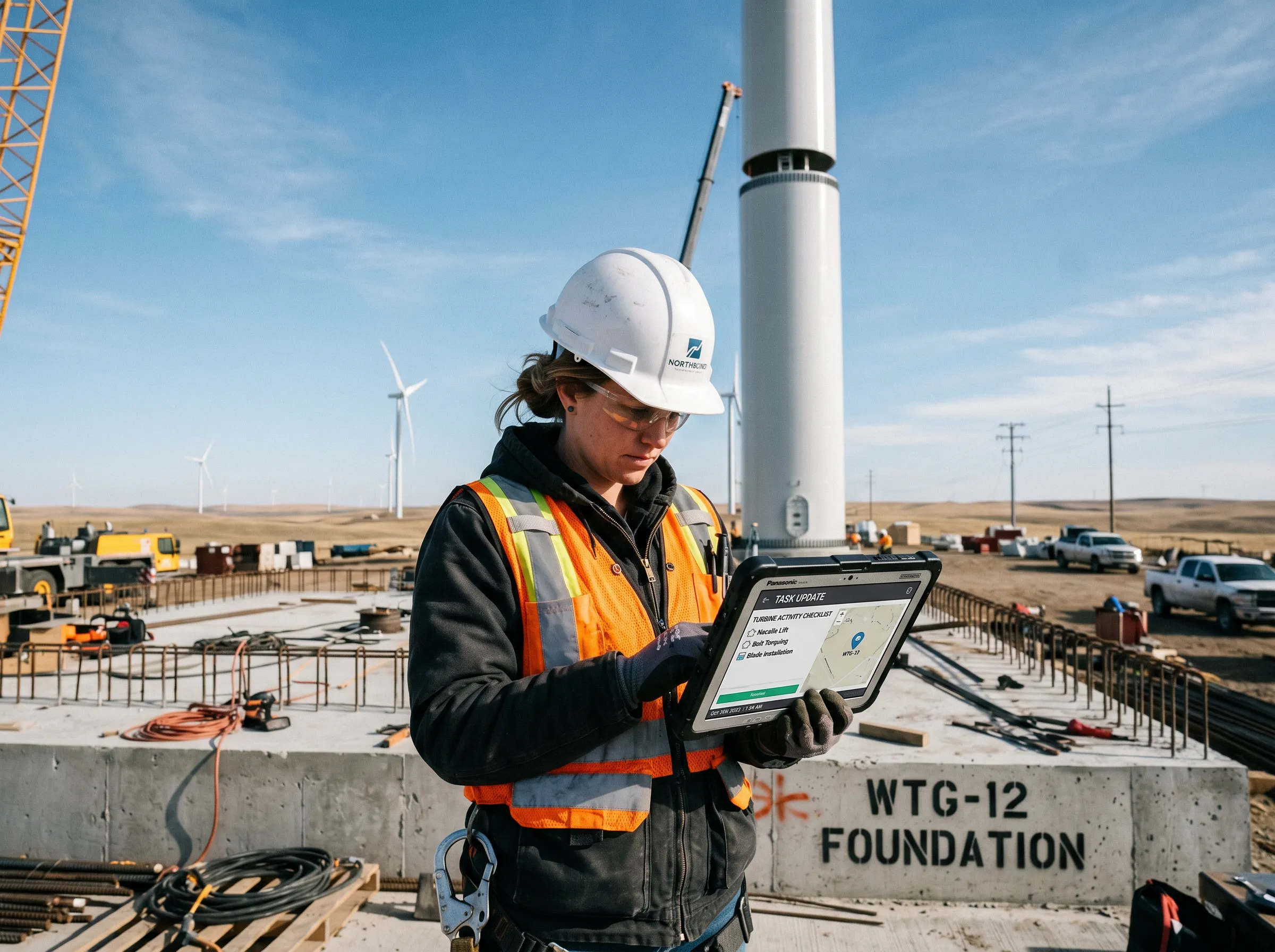
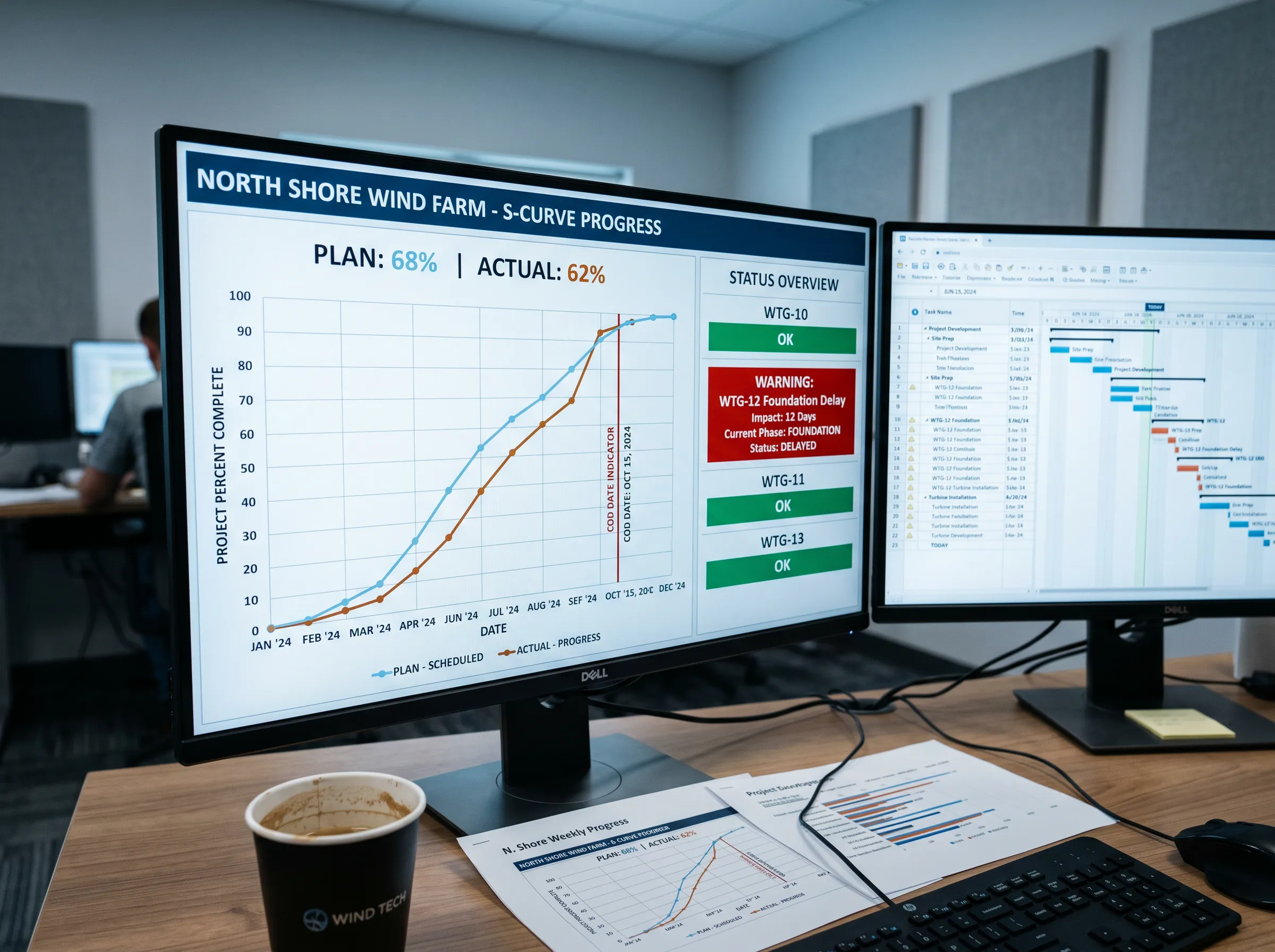
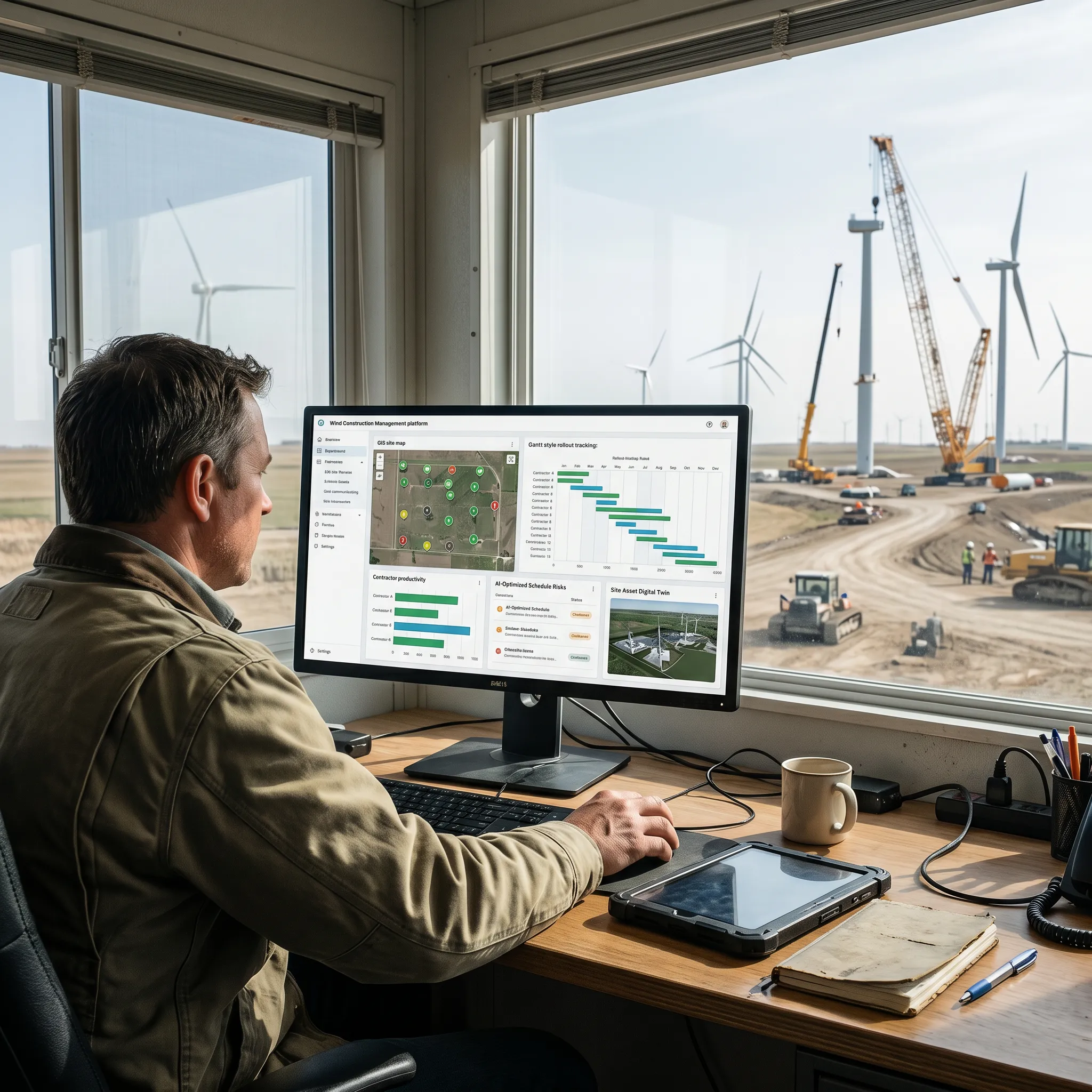
Field teams can navigate turbine locations, update foundation, road, lifting, and electrical work progress, capture geo-tagged photos, complete QA/QC forms, and submit daily field updates directly from site - even across remote wind farms. Managers get live site maps, automated S-curves, contractor performance views, and schedule risk insights. With NaaviX AI, teams can ask natural-language questions and move from field updates to faster wind project decisions.
NaaviX Prompt Examples
Which turbine pads are behind schedule this week?
Are access roads ready for blade and nacelle deliveries?
Which foundation or lift activities could impact the COD milestone?





Frequently Asked Questions
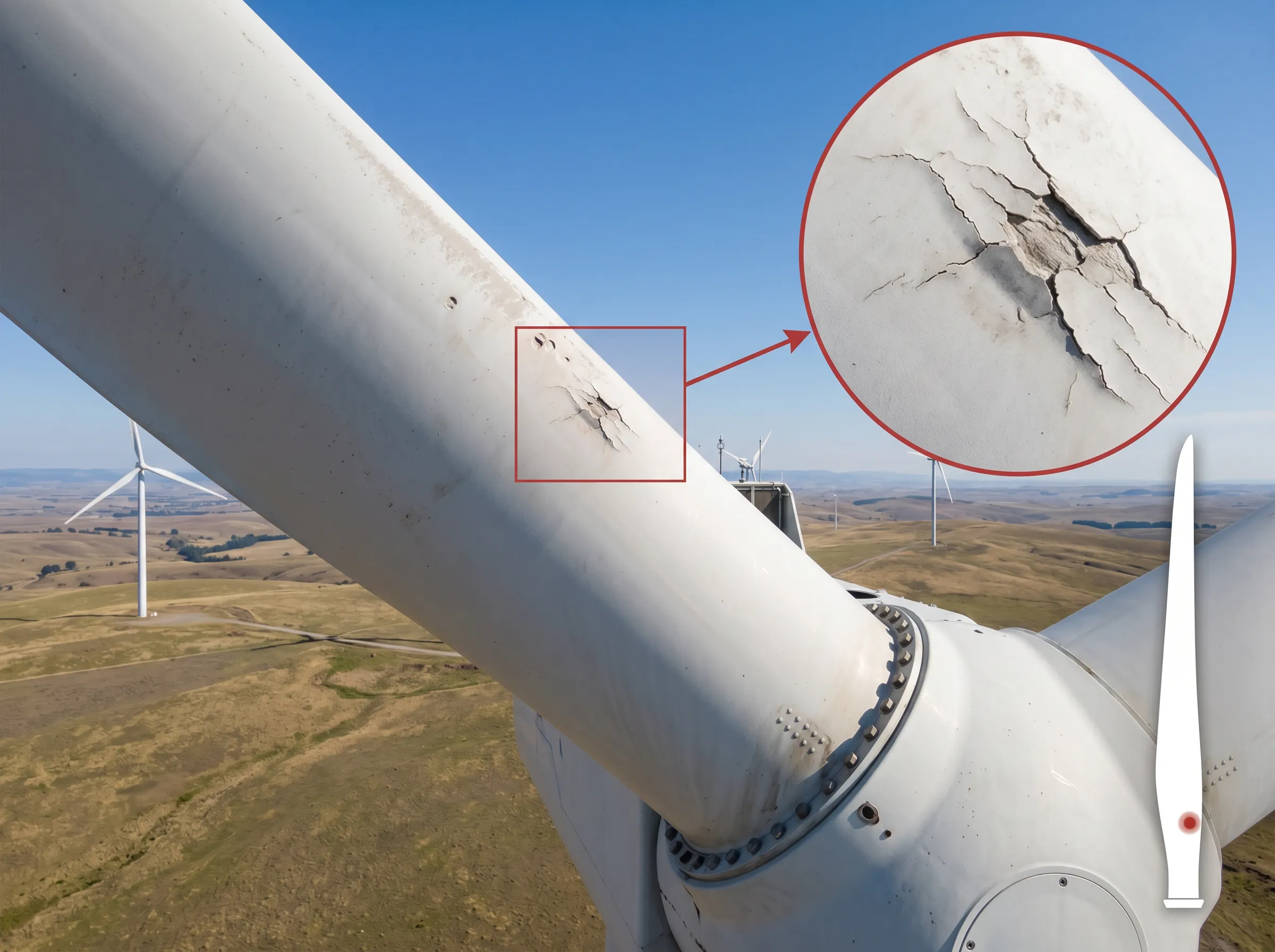
Does SenseHawk support turbine blade inspections?
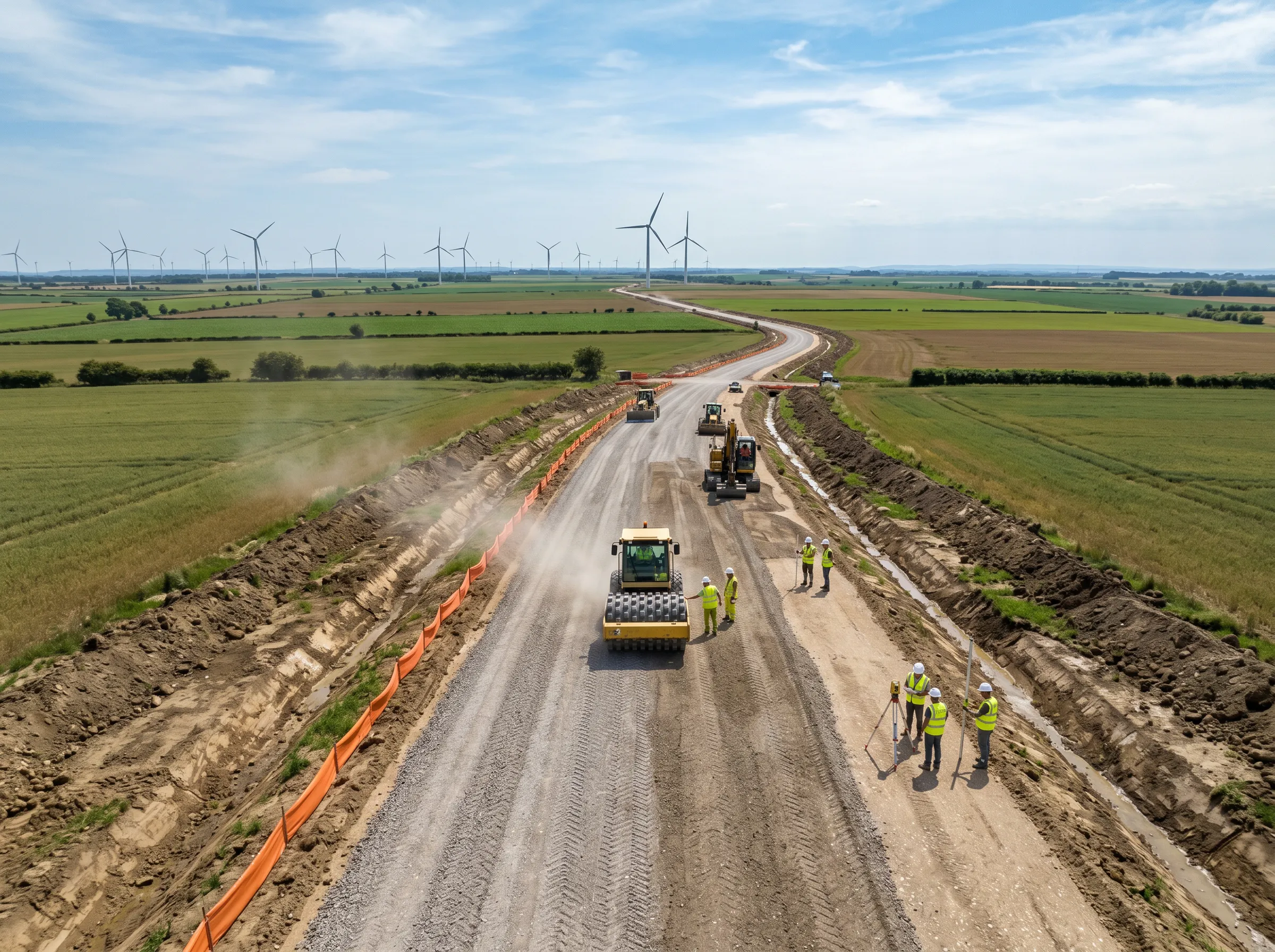
Can we manage the construction of wind access roads and foundations?
How does the platform handle the high-altitude data of wind assets?