Rare Thermal Signatures in Solar Panels: Bifacial, Half-Cut and Dark-Patch Anomalies Explained
Some solar thermal anomalies don't fit standard defect lists. Learn how bifacial, half-cut and dark-patch signatures form and why they affect yield.
Karthik Mekala
CMO
Published on
Thermal inspections have become a standard tool in solar construction and O&M. Most scans reveal familiar patterns (hotspots, string outages, or wiring issues). But every so often, we see something different.
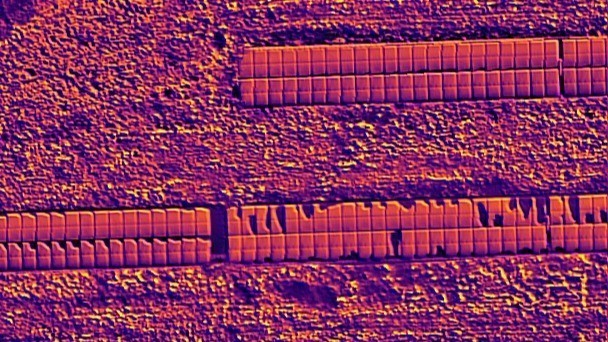
In recent projects, our scans have captured rare thermal signatures that defy standard categorization but carry important implications for system performance and long-term reliability. These include:
Unusual heating patterns on bifacial modules in certain site conditions
Dark patches that indicate hidden material concerns
Signature behaviors unique to half-cut modules under shading
These anomalies are seldom documented in industry guides, but they can impact yield, safety, and warranty considerations if left undetected.
A rare thermal signature is an infrared (IR) pattern that doesn’t map cleanly onto the standard defect classes used in solar panel thermal inspection. This post covers how these rare thermal anomalies in solar panels form, what they look like in IR, and why they matter. It is written for solar developers, EPCs and O&M teams.
Common vs. rare thermal signatures
Most thermal anomalies seen in a drone inspection fall into well-known classes of solar panel defects, such as those in IEC TS 62446-3. Rare thermal anomalies in solar panels are harder to handle because they either sit outside those classes or look like one defect while being caused by another.
Signature
Typical cause
How it appears in IR
Covered by standard classes?
Risk level
Single-cell hotspot
Cracked or broken cell, local soiling or shading
One cell clearly warmer than its neighbours
Yes
Medium; high above 40 K ΔT
Substring / bypass diode
Short or open circuit in a substring, junction box or diode fault
Module self-shading of reflected light at high-albedo sites
Vertical heating bands along the module edge, with no object nearby
No
Medium; ongoing yield loss
Dark (cooler) patches
Delamination: encapsulant separating from glass or cells, often after moisture ingress
Irregular, fluid-looking dark splodges spread unevenly across the module
No
Medium to high; worsens with age
Hotspot mirroring (half-cut)
Shading on one half of a half-cut module, pushing the unshaded half toward short circuit
Patchwork heating on one half, hotspot opposite the shade
Partly
Medium to high
Three Rare Thermal Signatures We’ve Seen in the Field
Unusual Heating Patterns on Bifacial Modules
Bifacial modules produce power from both sides, so their temperature depends on light reaching the rear as well as the front. Some unevenness in rear-side irradiance is expected. The abnormal version appears at sites with high ground reflectivity (albedo), usually in desert conditions: sunlight reflects off the ground onto the back of the module, and the module’s own frame and geometry shade that reflected light. In our scans, this self-shading shows up as distinct vertical heating patterns along the module edge. It looks like ordinary shading with nothing nearby casting a shadow, and it doesn’t occur on monofacial modules. Inspectors should check the ground under affected rows and whether the pattern repeats across identical rows. Reducing albedo beneath the modules, for example with gravel, limits the effect.
Dark Patches Pointing to Hidden Material Concerns
Most thermal defects show up as heat. Dark patches are the opposite: areas that read cooler than the surrounding cells. In our scans, the dark patches tied to material problems came from delamination, where the encapsulant separates from the glass or cells, often after moisture gets into the laminate. They appear as irregular, fluid-looking dark splodges spread unevenly across the module, and often don’t match any defect visible in a normal inspection. Delamination is typically seen in ageing or poorly manufactured modules and is sped up by heat, humidity or mechanical stress. Reflections of sky or nearby structures can also read as cool areas in IR, so pairing RGB with IR lets the inspector rule reflections out before flagging a module for closer inspection or a warranty claim.
Half-Cut Modules Under Shading (Hotspot Mirroring)
Hotspot mirroring is when shading on one half of a half-cut module causes cells in the other, unshaded half to overheat. Half-cut modules are wired as two halves connected in parallel. When shade from vegetation, structures or tracker misalignment falls on one half, the voltage mismatch forces the unshaded half out of its normal operating point and toward short circuit. Its weakest cells are driven into reverse bias and heat up. In our scans, this shows up as a patchwork heating pattern on one half of the module, with a hotspot opposite the shade. It is unique to half-cut designs and easy to mistake for a module fault. The fix is usually to remove the shading source, then monitor the case so the yield loss doesn’t repeat.
What Rare Signatures Mean for Yield, Safety and Warranties
Yield: anomalies that don’t fit a standard class are easy to skip or rank too low, so the energy loss behind them can carry on across many modules.
Safety: sustained solar panel hot spots, including mirrored hotspots on unshaded cells, can damage cells, encapsulant and backsheet over time and raise fire risk.
Warranty: undocumented patterns are harder to claim against module makers, so evidence matters. That means geo-located IR and RGB images, ground test results, and a record of whether the pattern recurs.
How to Detect and Handle Rare Thermal Anomalies
Fly under IEC TS 62446-3 conditions. That means at least 600 W/m² irradiance in the module plane, wind no stronger than 4 Beaufort (28 km/h), no more than 2 okta of cumulus cloud, and stable conditions. Poor flight conditions, one of the most common drone thermal inspection mistakes, can hide rare signatures.
Capture RGB and IR together. Pairing RGB and IR data is a core part of drone analytics in solar O&M, and it is the quickest way to rule out reflections, soiling and shading.
Flag unknown patterns as “unclassified” instead of forcing them into a category. Thermal drone inspection software like Therm lets teams reclassify anomalies, add notes and assign field checks, so an unusual pattern gets investigated.
Verify on the ground. Use I-V curve tracing to measure the electrical impact and EL (electroluminescence) imaging to find cracks and cell damage that IR can miss.
Document for warranty claims. Keep the IR and RGB images, test results and notes against the specific module and its serial number.
Track recurrence. Compare each new inspection with the last one. A pattern that stays in the same rows across inspections can point to site conditions such as albedo or shading, while one that spreads needs a closer look at the modules.
Conclusion
Rare thermal anomalies in solar panels, such as bifacial rear-side effects, dark patches and hotspot mirroring, all need context to interpret: site conditions, RGB imagery and ground-level testing. Treating them as unclassified until they are verified keeps false alarms down and stops real defects from being filed under the wrong class.
We’re sharing the full details with solar developers, EPCs, and O&M teams who want to better understand and address these rare issues in their projects.
Frequently Asked Questions
What is a thermal signature in solar panel inspection?
In solar panel thermal inspection, a thermal signature is the temperature pattern a module or component shows in an IR image. Healthy modules working under the same conditions show similar, even temperatures. A signature that differs from its neighbours, such as a hot cell, a warm substring or a cool patch, points to something worth checking.
What is hotspot mirroring in half-cell solar modules?
Hotspot mirroring happens when one half of a half-cell module is shaded and cells in the other, unshaded half overheat. The two halves are connected in parallel, so the shaded half forces the unshaded half to change its operating point, driving some of its cells into reverse bias. The hotspot appears away from the shadow, which makes it easy to misdiagnose.
Why do bifacial modules show different thermal patterns?
Bifacial modules also absorb light on the rear side, so their temperature depends on how much light reflects up from the ground. At high-albedo sites, the module’s own frame can shade that reflected light, creating vertical heating bands along the module edge that look like shading with no visible cause. Standard temperature-difference methods don’t account for rear-side light, so these patterns need context to interpret.
What should O&M teams do when a thermal anomaly doesn’t match a standard category?
Flag the thermal anomaly as unclassified, check the RGB image for reflections, soiling or shading, then verify on the ground with I-V curve tracing or EL imaging. Record the images, test results and module serial number, and check whether the pattern comes back in the next inspection.
These anomalies are seldom documented in industry guides, but they can impact yield, safety, and warranty considerations if left undetected.